read, write, ramble

Category: Ramble Page 56 of 57

Special …?

When I was told that our prompt for this week’s 52 blogs post was the word ‘special’ I had three soundbites pop into my head almost immediately. Two are tangentially related, but the third is nothing more than an entertaining memory. I’ll save that one for last.

Special is Different

Back in 2009, shortly after coming first in the Next President of the United States, Barack Obama became the first sitting president to be a guest on a chat show… and he did a pretty good job of demonstrating why presidents don’t go on chat shows with the fall-out from this offhand joke:

Obama: No, no. I have been practicing…I bowled a 129. It’s like … it was like Special Olympics, or something

As it turns out I’d actually misremembered the quote a bit and looking at it now it does seem a bit insulting: the clear implication being that special olympians aren’t as good at their sport as regular olympians. Either way, my initial (mis)understanding of the gaffe got me thinking about the use of the word special. It’s one of those occasions where a word in a certains contexts has developed a whole array of meanings, some of which are derogatory (think also of ‘gay’).

I’m fascinated by the way that language changes, how words evolve, get appropriated and misappropriated, develop meanings other than those that were originally intended. Special is one of those terms that you would assume emerged out of political correctness, but you have to wonder whether it’s used to make the ‘special’ people feel better or the ‘regular’ people feel less uncomfortable using words such as ‘disabled’. If we really wanted the ‘special’ people to feel better I expect we’d just call them ‘people’ – we wouldn’t have special olympians; we’d just have olympians – but instead we have this condescending terminology which equates to saying to someone: I’m going to call you special so you think that your difference makes you superior but in fact the word is just going to serve to highlight the same difference that we’re busily trying to brush under the carpet.

In consequence, we now have a culture where you can successfully insult someone by calling them ‘special’ (which is the crux of Obama’s gaffe: that ‘special’ is inferior).

Special is Fatal

Now, since this is my blog let’s go ahead and make things even more sinister.

If you have even the vaguest awareness of World War II history you’ll quite probably have the same upsetting connotation come to mind as I do. If you’re a history noob then all you need to know is that the Nazis used the term ‘special treatment’ because even those sick, murdering bastards realised that you can’t get away with having your business diary openly state: “Tuesday: murder another million jews, gypsies and homosexuals”.

While I don’t expect there’s any conscious link between the two uses of the term, it is interesting that the word ‘special’ is used in both cases as a mask: in one case to hide the use of murder, and in the other (I’m guessing here) to hide the use of a word such as disabled which could be seen as insulting, derogatory, prejudicial, offensive, disturbing or merely uncomfortable (of course, now the word ‘special’ can be seen as all of those things).

There’s also the use of special to signify other: you’re not the same as me, I fear you – you’re other – but I shall mask my distaste with a positive sounding term. … too cynical?

(Incidentally, I had assumed when I started writing this that the Special Olympics were inaugurated before the war, before the unfortunate misappropriation of the word. So it shocked me a bit to learn that they first one took place in 1968 – years after the Holocaust – but maybe the sinister connotations of the word special weren’t quite so widely considered at that time).

Special is The Same

The second sound bite comes from Babylon 5, a darned good sci-fi series from the 1990s that gives me plenty of brainfood even to this day.

To give you the briefest possible context you just need to know that the below quote involves three character archetypes: Delenn is the Wise Alien; John Sheridan is the Hero; Ivanova is the Voice of Reason. So… John has just been talking to Delenn and found her pretty impressive, then has the following exchange with Ivanova:

Sheridan: “Ever had a long talk with Ambassador Delenn, Commander?”
Ivanova: “Yes, from time to time. Why?”
Sheridan: “She and the universe seem to have a special relationship.”
Ivanova: “… Don’t we all?”
— Sheridan and Ivanova in “A Distant Star”

This was a pretty big eye opener for me. I was well used to science fiction giving us wise aliens and treating them as ‘special’ (both in the sense of being different and ‘other’, and in the sense of having some sort of wisdom or ability the rest of us might covet). Suddenly, with one almost offhand remark, all bets were off: we’re ALL special!

In the sense of the above quote we all have our own special relationship with the universe – such a simple truth, but one that most scriptwriters would avoid because they need their characters to stand apart from one another. In a more down to earth context we’re all special because we’re all unique and different; by the same logic no-one’s actually different because we’re all different. You’re only as special or different as the next person because that next person is just as unique as you are.

Sorry …

Special is Awesome

Let’s comfort ourselves with a reminder that in more innocent times, before you read this post, special could mean something awesome. That’s the message in the song I’m going to talk about, but it’s not the reason why I’m bringing it up.

Some years back I used to work in a UK record store called Our Price. One day a colleague of mine put on a Pretenders album and Brass In Pocket eventually came on (it’s probably one of the few Pretenders songs that I genuinely like, but that’s neither here nor there). My colleague’s humming along and we come to the chorus – the moment where Chrissie Hynde drawls “Ahhhm Spesh-aahhhl” – and out of nowhere my colleague puts on his best falsetto and joins in echoing “Speciaaaal!”

It got a laugh out of me at the time and whenever I hear Brass In Pocket I will always hear my old colleague singing it like a castrati (“Speciaaaal!”).

Check out the video below: the moment I’m talking about, if you don’t already know the song, is when the band members hold up the menus with – you guess it – ‘special’ written on the top.

Also, I never, ever found Chrissie Hynde remotely attractive, but this video …
Bedtime

Full disclosure: I chose this week’s topic; not because I had something in particular to write, but because I thought it would be a less abstract topic for people to tackle this week. However, having chosen the topic I quickly realised that I really didn’t have anything clearly in mind to write. Nevertheless, let’s press on…

As said above bedtime is one of my favourite times of day (no really, it literally says those exact words just above). It always perplexes me how resistant my six-year-old son is to the concept of going to bed. I tell him how it’s the best time of day: you get to lie there and sleep! But, no: he would much rather run around and throw himself at the furniture … which does sound kinda fun now that I write it down.

Up until recently it was a challenge to even get him to stay in bed: ironic given the challenge associated with getting me or his mother out of bed. Lately, however, he’s learned to read and we’ve found it much, much easier to get him into bed – he may not go to sleep when we want him to, but more often than not he’ll just be lying on his bed reading (and not throwing himself at the furniture).

I like to think that he’s finally discovered the real value of bedtime: it’s that time when you finally get to escape the day (for more, similar, thoughts on escape read my wife’s blog post on the subject).

Bedtime: part one

For me bedtime doesn’t necessarily start at the moment I climb into bed. It starts when I decide that I’m done with the day and I’m going to move towards achieving that vegetative state. That moment usually comes at around 10pm.

Many years ago, when I was living on my own I had a semi-regular ritual that would involve chocolate and bourbon (yeah, that sounds much more interesting that it actually was, so maybe I’ll just leave it there with whatever mental picture you’re desperately trying to evict from your brain right now).At the moment bedtime effectively starts with what my wife and I call “Friends’o’clock”, which is when the reruns of Friends start on Foxtel (9:30pm to 10:30pm, if you were wondering). Once I decide to embark upon Friends’o’clock it means no more computer, no more domestic tasks, no more of anything constructive or energy-draining: it means the productive day has officially ceased.

Bedtime: part two

Vegetating in front of the TV naturally evolves into vegetating in bed and reading. Traditionally this would involve reading books, but during the last few years I became fairly ill-disciplined and allowed myself to get distracted by browsing the internet on my iDevice. This year I’m trying to make amends by getting back into proper reading.

Reading provides the real escape: the chance to properly escape your day and immerse yourself in someone else’s world. I think it’s important to have that tangible, mental break from whatever issues have taken up your day. It’s all too easy to switch the light off, put your head down, then find all the unresolved details of your day bouncing around, repeating and recreating themselves, giving you grief all over again.

I occasionally have trouble getting to sleep. Last night it was because I had a coffee at 5pm (it was a great coffee: it was totally worth it). Other nights it’s for no reason at all. I’ll go through days or weeks of taking hours to get to sleep, then weeks or months of sleeping just fine.

When I was much younger I used to, for want of a better phrase, play movies in my head to help me get to sleep: I’d put myself in an episode of The Six Million Dollar Man, or imagine I was Batman, etc. 

As it happens I do much the same now, except I think about the stories I plan to write (and let’s not come away from this thinking that my stories are just great for sending people to sleep!). Bedtime is when I get most of my best ideas: the idea for Colder Still came from me lying in bed listening to a dripping tap; Graves came from an image I woke up with of a gravestone in my front garden; there are numerous other instance where the idea has popped into my head during bedtime, or the full plot has magically congealed itself.

Bedtime: part aaargh!

There’s a slightly more sinister side to bedtime, which I’ll briefly go into here since I don’t have any other ideas about how to end this post.

Once the lights go off everything … changes. A noise outside becomes more pronounced, a creak inside becomes sinister. A doorbell or phone ringing would be utterly heart-stopping. These aren’t things that necessarily keep me awake (though I will dwell upon them if I happen to be awake) but they all become more intrusive once you’ve turned the light off and decided that it’s time for the day to end.

Of course, these things also provide great prompts for stories …

Rescue

I would have been six years old when my Mum took me to Leicester Square (braving the impossibly tall and vertigo-inducing escalators of Leicester Square underground station) to see Star Wars. It definitely wasn’t the first film I ever saw but, as with many people of my generation, it was one of the first to make a lifelong impact.

Suddenly there were heroes, villains, princesses, spaceships – and a whole galaxy in which to fly them. There were insurmountable odds and terrific victories, death and rebirth, machines that you wanted to have as your best friends and heroes that could save the whole universe.

(It wasn’t until many years later that I started doing things like looking for the tape holding Carrie Fisher’s breasts down, or thinking: “A farmboy, a pirate, a walking rug and an old man taking on squadrons of enemy soldiers while trapped on the most technologically advanced battle station in the galaxy? They’re totally gonna die!”)

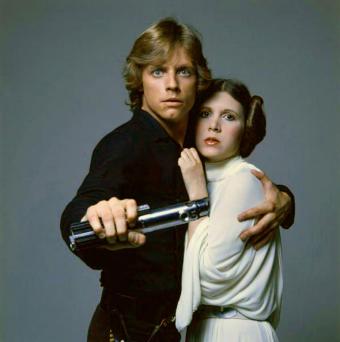
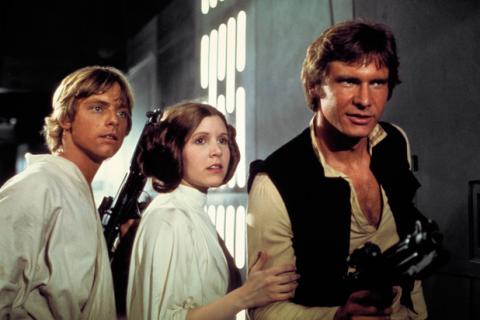
When I thought about the topic ‘rescue’ for this week’s post one of the first images that popped into my head was this:

618_movies_star_wars_luke_leia_han.jpg

One of things I remember most about Star Wars, it turns out, is Luke beseeching: “We have to rescue the princess!”. Years later the phrase “Save the cheerleader, save the world” would get similarly stuck, and now I must wonder if there was a slight echo in the heads of the scriptwriters for cheers.

Probably not, but it’s nice to think so.

Of course, one of the best things about Star Wars – and having been brought up on Disney films, I must have noticed this at the time – is how the princess didn’t really need rescuing. Sure, she was locked in a cell, in that same technologically advanced battle station, with an imminent death sentence hanging over her head, but once she hooked up with Luke and Han they were on equal footing right from the outset (“Didn’t you have a plan for getting out?!”)

It’s an important lesson for an impressionable six year-old: classic stories have heroes rescuing princesses, but the truly great stories have the princesses rescuing the heroes once in a while.

The other picture

As a totally unrelated side note, while I was googling for the above picture I also found the image below which I have never, ever seen before in my life. While I don’t profess to be a Star Wars obsessive, I’ve still been enough of a fan to have seen most of the existing promotional shots several dozen times over. Finding a promo still I’ve never seen before – and one that’s clearly from A New Hope – is pretty exciting to a geek like me.

Luke&Leia.jpg

Check it out: Leia is clearly in her New Hope costume, complete with donuts, but Luke almost looks as if he’s from Return Of The Jedi. Look a bit closer: is Mark Hamill actually in his own clothes, had he only just been cast? Could it even be part of Han Solo’s costume? What’s the background to this picture?

Voices

The voice is one of a writer’s most important tools. Sure, being able to write good and spel stuff is important too, but if a writer can truly grab their audience then some sins can be overlooked. In fact, along with plot and character, voice is one of the three key tools in the writer’s workshop. Together they give you: what’s going to happen in your story; who’s going to make it happen (and, if you’re doing things properly, why); and how it’s going to be told.

Warning – the rest of this piece will unavoidably include some shameless plugs for a few of my stories…

One of the great advantages of the short story form is that it lets you try out a multitude of voices with only a limited risk of pissing off your audience. For a budding writer such as myself this is an infinite and invaluable playground: I can not only take time to discover my own voice without having to go back and rewrite screeds of fiction but also try on plenty of other voices for size.

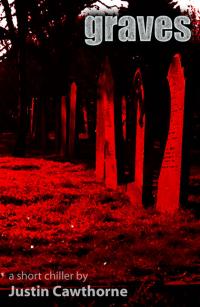
graves.jpg

For my first two stories, Colder Still and Graves, I didn’t give much thought to the voice. I was far more concerned with telling the story and, at that stage in my non-career, simply finishing it (actually, the finishing is still proving an issue…). With Colder Still, in particular, I was a little surprised to end up with two characters who bore virtually no resemblance to myself: one a bitter drunkard; the other a soldier in World War II (I am neither of those things). In fact for a time I was marginally worried that readers would think that the the bitter drunkard character was in some way meant to represent my own inner voice (he doesn’t in any way). 

For Graves I was far less ambitious. I made no real attempt to define a voice since the main character simply provides a viewpoint for the reader; he doesn’t drive the story greatly, merely lets it happen around him. For stories like that you sometimes want a Generic Male (or Female) so that readers can more easily put themselves into the story. (As a footnote here, judging by the reception for Graves, which is easily my most popular story to date, I think I’d successfully found my voice by this point).

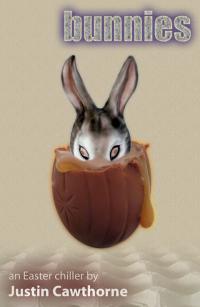
bunnies.jpg

Obviously then I got cocky. My next story, Bunnies, proved a real challenge. Following a slightly tortuous development I eventually settled on a story in two halves, with a different primary character in each half… which, of course, meant two voices again. To make life even harder for myself I decided the first half would be from the viewpoint of a nine-year-old girl (and I haven’t been one of those since ever!). After writing the first page a few dozen times I realised the interesting conundrum this posed: how to give my story the voice of a nine-year-old girl but not make it read as if it had been written by a nine-year-old girl. I got there in the end, but it took quite a few drafts to get to a point where I was happy with what I was doing.

While most of my stories default to a Generic Male voice, the experience of writing Bunnies did give me the confidence to not shy away from other voices when needed. For The Last Laugh, a parody of pulp/noir fiction, I not only had to move out of the horror genre that I’d settled comfortably into (unless you find clowns scary, in which case we’re still right at home there) but make sure that my main character had just the right hard-boiled tone about him.I’m not sure how successful I was with the story, but it was certainly a lot of fun to write.

In perhaps my boldest departure yet, the story I started last week is written from the point of view of … well, I don’t want to give too much away but let’s just say the main character could hardly be further away from who I am. I hope I can pull it off.

As a last footnote I’ve noticed, while writing this post, that I’m not particularly keen on the voice it uses. It seems – to me at least – a little self-important (“When I was knocking back some beers with my good friend Shakespeare the other day, I gave him some points on that new Scottish play of his …”). I’ve toned it down a bit but since I don’t want to labour this post, and since it’s probably just me being self-conscious, I’ve decided to leave it as it stands. Just seemed an interesting final irony …

Top 5 cakes (52 blogs)

Cake.

What would life be without cake? Cakeless, I guess, but let’s not dwell on that horrific, potentially post-apocalyptic scenario (and let’s just hope that even when the world ends the good old-fashioned bakery will still prevail).

Although I’m not a huuuuge cake eater it’s reasonably safe to say I’ve never met a cake I didn’t like. Put a cake in front of me and I will eat it (put two cakes in front of me and I will eat both and score myself a nickname for life). I prefer chocolate based cakes … actually I prefer chocolate based anything – and I’m frequently unexcited by mere sponge cake but, as you’ll see below, several of my favourite cakes don’t even involve chocolate.

So, what follows is a list of my top 5 cakes; cakes that have made an impression on me over the years; cakes that I would have to do my duty by nomming into oblivion were they to be placed in front of me; cakes that, by all rights, should be an essential component of a carefully calorie-controlled diet.

5 Manor House

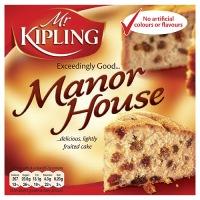
Mr_Kipling_Manor_House_Cake.jpg

This is one of of Mr Kipling’s ‘large cakes’, but if your definition of large is the same as mine then you’re likely to be disappointed at first. However, if your definition of large is ‘can I eat this entire cake in one sitting’ then you’re in good company with a Manor Cake.

It’s true that this isn’t the best cake in the whole world, but it’s one of the most convenient (just open the packet and slice… or not) and it saw me through many a hangover in my teenage days. For that reason alone it makes it into my top 5 cakes.

4 Jaffa cake

Jaffa-cake.jpg

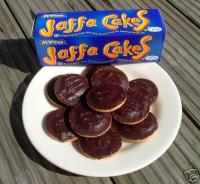
Is it a cake or is it a biscuit? Well, it goes hard, rather than soft, when you leave it out (oo-er) so it’s a cake. Actually they tell you it’s a cake right on the packet so if you still think it’s a biscuit then there’s nothing more I can do for you. Eating an entire packet of Jaffa Cakes is all too easy: the dark chocolate, the tangy orange jelly, the firm, spongy base. What’s not to love?

3 Carrot cake

Carrot-Cake.jpg

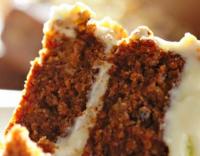
Vegetables? Plus cake? What dark sorcery is this? That was mostly my reaction when I was first invited to try some carrot cake. Since then I’ve been hooked. It has to be moist and it’s better with the cream cheese topping (and some cream cheese filling too just for good measure). Dry carrot cake is a bit like flat beer: you’ll drink it, but you’ll hate yourself with every mouthful.

2 Cheesecake

Cheesecake.jpg

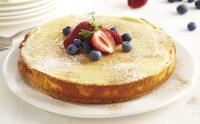
I love almost any cheesecake. It can be a packet mix with ground-up digestive biscuits for the base, or it can be a full-on New York style baked cheesecake: I don’t discriminate when it comes to cheesecake. While the filling is the best part, it wouldn’t be anything with the contrastiness of the crumbly, crunchy base – possibly what draws me to Jaffa Cakes too.

OMG – what if they made a cheesecakey version of Jaffa Cakes? Has anyone done this? Can we patent this idea?!?

1 Chocolate fudge brownie cupcake

crabapple-choc.jpg

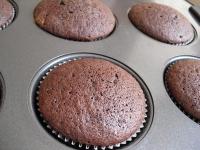
The best cake in the universe is one my wife makes (no I’m not being biased there: you’d totally agree with me if you tried one of these). We bought the Crabapple Bakery Cupcake Cookbook a few years back, tried the Chocolate Fudge Brownie Cupcake recipe and never looked back. I think we’ve only tried one other recipe from the book since we got it.

The basic recipe for this cupcake is chocolate, chocolate and more chocolate. And butter. It is chocolate in cake form: all the chocolatiness of chocolate and all the cakiness of cake (if you’ve been disappointed by other ‘chocolate’ cakes then you’ll understand what I mean). The recipe is supposed to include icing, but you don’t really need it – the cakes are *that* good. If you live in Sydney you might be lucky enough to try an ‘original’ at one of the weekend markets otherwise grab a copy of the book and try some homemade – it’s worth it.

(Disclaimer: I’m not sure how much of the awesomeness is in the recipe and how much is from my wife’s tender, loving, mad baking skillz but you can only try and hope for the best.)

52 Blogs

I’ve set up, and am participating in, a new blogging initiative called 52 Blogs. The idea is simple: to get all participants to post (at least) one blog per week. Full details are here if any readers fancy joining in.

The first topic is cake, so if you find yourself wondering why I’m suddenly writing about cake, well … now you know 😉

Getting back into it

I’ll be honest: 2012 was meant to be the year I really knuckled down to the writing (just like 2011, 2010 and 2009 – it’s a tradition thing). I was either going to write the novel version of Graves that’s been sitting in my head for a while now, or I was going to churn out a few more shorts and do some sort of collection.

Then a couple of things got in the way: I took on a significant freelance project (unlike the writing, this one paid real money) and we had a baby – pro-tip: babies don’t just sit quietly in the corner; they need feeding and cuddling and, well, they’re just so demanding!

Needless to say, I wasn’t really in a position to concentrate on writing much of substance, but that didn’t stop the ideas coming. which means that I have a whole stockpile of stories I’m just itching to write. Luckily I more or less wrapped up the freelance gig the other week (http://filmink.com.au if anyone’s interested) … but I’m still working on when the baby can pack up and get it’s own place; we’re haggling on somewhere between 6 months and 30 years old. Fortunately the baby does sleep some of the time (and also fits nicely into a soundproof box) so I’ve decided it’s time to get writing again.

Morning is broken

The biggest challenge to me at the moment is time. I’ve been highly inspired by a friend of mine, Joe Barlow (catch up with him at http://twitter.com/JoeBarlowWrites and http://www.joebarlow.com/), who has been rising early every day and simply hurling words at the page, it’s like he has some sort of literary gastric disorder – it’s truly impressive, and also pretty disgusting when you put it that way: good luck to anyone who picks up his finished novel.

I used to be a night owl, but then I had kids, and got a proper job, and suddenly night is that time when I have sleep, glorious, sleep and will slay you if you get in the way of that (see also: babies). I find it intensely difficult to write in fits and starts, although if you check out some of my other ramblings you’ll see I’m trying to ‘train’ myself to write that way. That leaves mornings as my next best option: a time when I’m relatively lucid (in theory), alert and refreshed (in theory) and unlikely to be disturbed (in theory – did I tell you we have kittens too?).

We might work it out

The next step is forming some sort of routine, or workflow, or preferably a combination of both. Previously I did almost all my work in Google Docs – I’d sketch out a synopsis, add a few notes, then start writing the story at the top of the same document. It worked well enough, but after a while I got irritated with constantly scrolling to the bottom of the document to remind myself of my plot structure, and then scrolling back up again to do the actual writing.

More recently I’ve had great success using Evernote for writing plot synopses, character notes and other odds and ends. The advantage here is that I can have one folder per story, with as many ‘notes’ as I need inside each folder. Unlike Google Docs, Evernote isn’t completely painful to use when you want to write edit something on your iPad. Meanwhile, I carry on doing the writing itself in Google Docs (now Google Drive). 

Unfortunately Google Docs is awful if you want to try editing anything on the iPad, and the new Google Drive app doesn’t even have editing features (fail!). This isn’t too much of a big deal: I write on my main PC (or sometimes on my work PC, during lunch), but it’s a bit of hassle if I’m proofing something on the iPad and want to do some line corrections.

Yes, I’ve toyed with dedicated writing tools such as Scrivener, but find that I get distracted with anything that’s too heavily featured. Also, Scrivener for PC doesn’t do quite such a good job of syncing with Dropbox as the Mac version does, which means that anything I write with Scrivener is only really accessible via my home PC. I expect I’ll explore Scrivener again when I eventually start on that novel.

Wooden it be nice

The final step in getting everything ready was to prepare my writing environment (that sounds especially pretentious, but never underestimate the value of having the place where you do your writing ‘just so’). 

For me this was a case of tidying up my home PC a bit: I cleared up the enormous mess of icons on my desktop; I added a few new icons (Evernote, Google Drive, etc) so that I would only ever be one-click away from writing; I switched to large icons just for the hell of it (change of scenery, etc); and I set up a suite of wooden themed desktop backgrounds (dunno why, just thought that having wooden backgrounds would be neutral enough not to be distracting and natural enough to be inspiring).

Now the rest is up to me …

New new site

Welcome to my new site, justincawthorne.com (in case you didn’t know where you were). This site has been well over six months in the making: those six months comprising of one month of pondering; four months of procrastination (and having a baby); one week of idle scribbling; then, finally, two weeks or so of excited website creation.

The final step was, basically, thieving a whole load of content from my other site edpriceishungry.com (why is Ed Price hungry? you’ll find out one day, or so I keep promising…). So, if you want to follow my writing, and my thoughts on writing, stick around here. If you want to witness my ramble, rant and rave about other things then bookmark edpriceishungry as well.

How will this site work?

For now I’m keeping it simple, so there will just be three sections:

Read: if you want read (see how I worked out what to call this section?) the stories I’ve written then take a gander through this section of the site.

Write: if you’re a fellow writer then you’ll find some articles about writing processes, exercises and challenges here. I hope to make this section as useful as possible to fellow writers which, in short, means I’ll probably be linking to lots and lots of stuff that other people write about writing.

Ramble: everything else will just get dumped here. This might be blogs about me writing my own stories (or excuses for why I haven’t written anything in the last x months). It might be reviews of other books. It might even be things that I haven’t thought of yet. Like cheese. I like cheese, so it follows that I would like writing about cheese.

Let’s see how that goes.

In the meantime, enjoy what you find here already and don’t forget to check out all my stories so far on Smashwords.

The not-Easter and not-ready-yet story

At the end of last year, buoyed by the warm reception for short story Graves (and also encouraged by the fact that I’d actually managed to finish writing a damn story) I pledged to write an Easter story. I figured that giving myself four months’ notice would be enough of a heads-up and that even I would be able to churn something out by April.

baby_bunnies[1].jpgYeah, I was wrong about that.

I did start the story. I planned it. I wrote about half of it. And then I stalled. Along the way I had a few changes of voice, came up with some better ideas than I’d originally had, but something wasn’t quite gelling. As the end of April loomed it became abundantly clear that I wasn’t going to finish the story, at least not in any satisfactory manner. Also, with my parents due to fly over for a long awaited visit over Easter I knew I wouldn’t get much of a chance to sit down and write for much of April (in fact, as it turned out, my parents were stranded with us for the entirety of April due to a pesky volcano that wouldn’t stop spewing).

So it’s been a week now since my parents flew back to England and while that wasn’t exactly a cause for great celebration I was looking forward to getting stuck into some writing again. Of course, instead of doing that I’ve been doing other things such as drinking wine and watching Buffy The Vampire Slayer.

Part of the reason for this procrastination is that I wasn’t quite satisfied with how the story was turning out, but at the same time I didn’t really know what I was going to do with it once I put my writer’s hat back on. In truth I still don’t know, but today I rewrote the first paragraph in a bid to kickstart the writing process again. I often find myself agonising over first lines, and first paragraphs – they’re the crucial hooks, the precious few words you have to draw the reader in, to set up your stall and to get the mood just right. I might still have it wrong, but you tell me – does the following make you want more?

Katarina walked down the road to Brendan’s house. She carried the box carefully in front of her, holding it with both hands to make sure she didn’t drop it. It was already starting to get heavy, but she didn’t mind. She loved being out at this time of year, she loved the air; it was warm and bitter and full of mischief. Also it would be getting dark soon. The change was always good: the change from light to dark, from warm to cold, from alive to dead.


(the story behind) Colder Still

colder_still_sleeve.jpgColour me surprised. Sometime over the weekend of March 13 2010 the total downloads recorded for my short horror story, Colder Still, passed beyond the 1,000 mark. How many of those 1,000 people have actually read my story I have no way of knowing, but it’s exciting enough that the story is readily available and that more than 1,000 people have demonstrated enough interest to at least download it.

It was published (i.e. uploaded) almost exactly a year ago, so it’s taken a while to get even this far. I can’t claim to have done any great promotion for it, other than a few pleading mentions on Twitter. In fact I fully expected to see a few downloads within the first week or so and then pretty much zip after that. Nevertheless, over the past year downloads have continued quite steadily and show no signs of slowing down (1,135 downloads as of my last check).

It’s always been my intention to discuss the process of writing my stories – whether you want to know about it or not – and reaching 1,000 downloads is enough of a cue for me to start talking  about how and why I wrote Colder Still. I do want to say up front that if you haven’t read the story you should stop reading this right now as there will be spoilers. Instead, if you’re so inclined, go over to smashwords.com and download Colder Still.

Ready to go on? Okay, so most of my stories (or, at least, my ideas for stories – many of which remain unwritten) come from the tiniest sparks of inspiration. It could be an idle thought, a ‘what if’, or some random image that pops into my head while I’m halfway between sleep and wakefulness. In the case of Colder Still it was a dripping tap.

Seven years ago my wife and I lived in a small unit in Maylands (Perth, Western Australia). One night I was lying in bed and could hear the tap in the bathroom dripping. As it went on I started to think of the water as something sentient that was trying to escape from the tap, slowly and patiently, something that would finally creep out of the sink, ooze its way over to me and eventually trickle its way down into my lungs. I should probably add that I wasn’t overly concerned about this possibility – if I was I’d have just gotten up and turned the tap off – but I enjoyed where the thought process was taking me.

Although I started dwelling on this very slight concept of the water having a purpose, or a function, I couldn’t get into the idea of it having any sort of consciousness. This left me with the basic thought that the water would have to be, somehow, under someone else’s influence; a kind of remote murder weapon perhaps. But how do you ‘program’ water? The obvious way, to me, was that you ingest the water yourself and subsequently the water absorbs its programming directly from you (a process of osmosis, if you like). We’re already leaning towards a revenge scenario, but how much more interesting is it if the only way you can exact your revenge is through your own death? Now the water could work as some sort of potentially unstoppable virus, propagated by hatred from one person to another, each one dying in turn and condemning the next maligned soul to a watery death.

Still, you can’t write a story about water alone. I needed a framework and it just so happened that I’d been reading Band Of Brothers around the same time. While I wasn’t particularly looking to write a piece of historical fiction, some of the imagery from the book inspired me, as did the sense of other-worldliness that comes from being at war. Where my memory gets fuzzy is exactly how and why I ended up with a cross-generational tale. I would guess that I wanted to explore that old mainstay of fiction: the Mysterious Object (or, indeed, Sinister Memento) that is found in the closet or cupboard or elsewhere. That leads naturally enough to a father hanging onto a memento from the war.

One other point now consigned to the mists of forgotten memory is why the characters turned out the way they did, specifically the father and son. I can guarantee that there’s nothing in there that resembles any familial relationship of mine. However, drama works best when dealing with conflict rather than harmony so it’s, again, a natural step to have a father and son who hate each other, and that, in turn, leads nicely to the story’s conclusion. Also, we’re talking revenge here, and while there’s a small cast of characters in the wartime scenes, there’s a contrasting sense of intimacy (however antagonistic) in the contemporary scenes. Why introduce needless characters when you can be economic and stick with just the father and son?

In review

As mentioned I wrote this story seven years ago, while sitting in a wiltingly hot apartment in Maylands, usually while my wife trotted off to her bar job. I don’t recall how long it too to write, but let’s say a month. Once it was written I made a passing attempt to find a home for it but, in truth, it was too long for all the short story publications and competitions that I found so I just let it sit there on the hard drive. I read it through a few years later, made a few changes, and then consigned it to digital purgatory once again.

Sometime last year I started to get interested by some of the new self-publishing options available, as well as the freedom that the rise of the ebook allowed. I thought as a trial of sorts I’d dust off Colder Still and upload it to Smashwords, which seemed a very promising online publisher at the time (and still does). I can’t exactly claim the rest is history, but over the past year I’d had a bunch of people read the story, who would never have done so otherwise, and I’ve even been lucky enough to get some nice comments and feedback.

Reading it back I’m surprised by how much of the story I still like (I usually groan when reading back anything I’ve written from more than about 6 months ago). I’m pleased that several of the wartime supporting characters come to life in ways that weren’t entirely planned, such as Malone and particularly McWhirter. There are also a few scenes that remain with me many years after I first envisaged them, like the unseen death of Weathers and the water trickling its way, unnoticed, into McWhirter’s mouth. I’m also frequently surprised to find the the main character actually dies less than halfway through the story.

One of the things I’m still not entirely happy with is the length. Although it’s the right length for the story itself, it’s still too long to be a short story, and too short to be a novella. At one point I considered trimming it down to try and make it suitable for magazine specifications, but there would have been nothing left! I’ve considered expanding it but, as interesting as the main concept is, I don’t think I can usefully take it any further than I’ve done already. I’m not about to add a death every 20 pages, or pad out the exposition to interminable lengths, or turn out something that would end up being a poor imitation of Ringu.

So I’ll probably just leave it as it is. Either way – I hope you enjoyed it.

Page 56 of 57

Powered by WordPress & Theme by Anders Norén