
In a development that really shouldn’t surprise anyone, the third film in our Licence To Watch marathon is Goldfinger. A well recognised classic of the Bond canon it is held up as the template upon which many future entries were based. But is it really worthy of this revered status?
Category: Ramble Page 55 of 57
Our Licence To Watch project continues with From Russia With Love (also known as The One With The Train Fight).
The concept of ‘city’ is vast and hard to define clearly: is it about people? businesses? buildings? There are simplistic interpretations which aren’t very interesting (“it’s where you get the big buildings!”) and there are other viewpoints which would take a whole thesis to cover in only the vaguest detail (“How does a city become a city?” for instance). I’m tempted to wax on about what makes a city a city but there are probably much better pieces of writing out there on the subject than I can muster here.
Having grown up in London (a big city) and then relocated to Perth (a tiny city) I feel quite a personal connection to the concept of city, and to London in particular, so I thought I‘d offer up a more personal view of ‘city’.
The big city
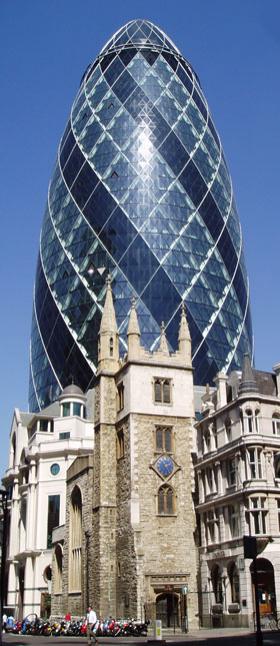 I said I grew up in London: that’s not strictly true. London’s a huge, sprawling place that expands beyond the city centre and encompasses many suburbs. I grew up about 10km from the city centre which is still close enough to consider myself a city boy. My earlier years were more about discovering my home town (Twickenham, if you’re wondering) but as I grew so did my boundaries: London was no further away than a few stops down the train line and so became part of what I called home.
My awareness of what it must be like to live in more confined environs (a remote town, a small village) was limited to books, films, or occasional visits to far away relatives. The change of scenery (whether real or imagined) was always nice but somewhere at the back of my mind was the recognition that your life was limited to this one place (remember: this is a the perspective of a young boy to whom an endless, empty meadow is possibly one of the most boring things in the universe). Where I lived there were always people, always things happening, and if those things got boring it was never more than a bus or train ride away to the next place where things were happening.
As I got older I always fancied a stint of living right in the city – perhaps an apartment near Tower Bridge, or somewhere within walking distance of the West End (the sort of place where a Hugh Grant movie character might live) – but that was never a realistic option. Living in London is *expensive*. The closest I got to living in the city was Shepherd’s Bush, which is one step away from Notting Hill (oh, hai Hugh!) which is right next to Kensington, which is virtually the city. Sort of.
I’m not going to pretend that Twickenham eventually got too small for me: I did plenty of socialising around Twickenham, Richmond and the general area: I even moved back to Twickenham for a while after getting married. There were great pubs, excellent restaurants, beautiful scenery. However, I also spent many happy days or evenings over the years heading into London to shop, browse, socialise, drink, eat, see films, work. Like any city it has an energy that can be inspiring and infectious. Also, like any city, it’s a natural focal point. I guess in the end living just outside of the city meant that going into the city was still a bit of an adventure. And it never really stopped being an adventure.
The undiscovered country
I vividly remember once finding the idea of moving away from London almost unimaginable. I can’t remember what inspired this thought, but it was probably during my twenties when I was truly starting to discover the city (clearly my feelings on the matter changed). At the time the city represented my friends, my life, a whole world of possibilities.
I’ve often thought about what it would be like to live in the country. While the peace and quiet have a certain appeal I’m almost certain I’d never settle (though I’m pretty sure that certainty has diminished over the years).
I grew up in a flat (or unit, if you like) and was used to having neighbours on all sides, used to having a main road outside, and used to not having an upstairs or downstairs (or even much of a sideways, for that matter). One time I house sat for some relatives who had a ‘proper’ house. It was unnerving. There was no noise from neighbours. There was no constant drone of cars outside. There was a garden directly outside the window (I forgot to mention my flat was on the first floor, so not much chance of anything climbing in the window or back door). On one occasion the phone ‘binged’ – it didn’t ring, just binged – as if someone had picked up the handset upstairs. Of course, there was no one upstairs.
Or was there…?
Needless to say removing the noise and confinement, part and parcel of city living, had an unsettling effect. The irony was that the house was in Clapham: far closer to London than my flat, but it made me realise how accustomed you get to your immediate, familiar environment. I suspect that, having been brought up a city boy, moving to the country (to eat a lot of pee-eaches) would be similarly unnerving.
The little city
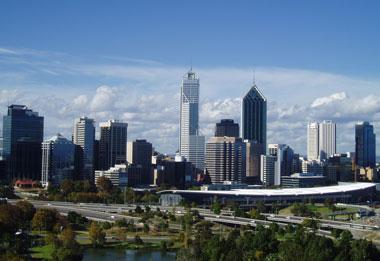 I now live in Perth and I take great, yet ironic, pleasure in dismissing the place as ‘not a real city’. Patronizing, sure, but ironic because it’s absolutely my choice to live here and right now I would not want to live anywhere else. I’m ready for a little city.
Samuel Johnson famously said: “… when a man is tired of London he is tired of life” (I can only assume women don’t tire as easily). I’m certainly not tired of life (perhaps tired of not getting enough sleep, exercise or green vegetables) but I reached a natural point before emigrating where I was comfortable that I’d ‘done’ London.
Of course there’s no way you can really ‘do’ London: any major city is so large and ever-changing that you could never exhaust all its possibilities. Even in our last few months there my wife and I took great pleasure in discovering a few corners of the city that neither of us had really explored before. However, I was happy with my experience of London: what was left was places I had little desire to visit or places I’d been to many times before: favourite places to be sure, but often nothing new. It’s all too easy to repeat yourself and stagnate: new surroundings allow us to open our eyes again.
The city…
Perhaps that can be my definition of the city: a place that keeps your eyes open.
You can go to any place, even somewhere you’ve been a thousand times before, and if look at it with ‘new eyes’ you’ll always see something new. I’d walk around my hometown sometimes and make an effort to look up where I’d usually look down, look right where’d I’d usually be distracted by something on my left: every time I would see something I’d never noticed before. Usually you have to make yourself do this: in the city, where everything changes all the time, you often have no choice.
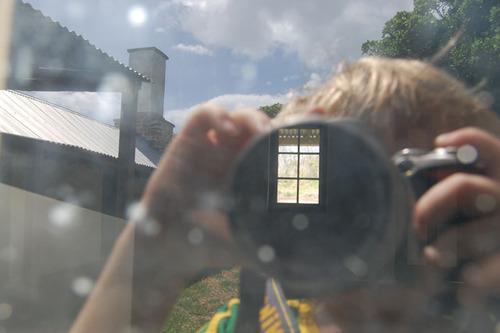
(Full disclaimer: it’s my son in the photo, and he’s also the person taking the photo.)
As a general sci-fi fan I find the concept of parallel dimensions, fractured realities and alternate planes of existence quite compelling. If you’re any sort of a sci-fi fan you’ll almost certainly have encountered the concept: Fringe is one of the most recent examples I can think of but it’s something that’s cropped up numerous times in various Star Trek episodes.
This photo doesn’t quite give us any alternative dimensions (that we know of), but it does fracture the visual plane quite a bit. It also shows us a viewpoint that would be next to impossible to see with just our eyes thanks to the various reflections captured. Photographs where you can see the photographer are, inevitably, a little bit meta but in those shots the photographer is typically photographing themselves. Here we have a case of an accidental selfie: what is actually being photographed is shown, appropriately enough, within the lens of the camera (although I’m not sure if it’s being reflected by the lens or simply by the window in front of the camera) but it’s now one of multiple subjects. In this single photo we can see the camera capturing both its subject and object.
Linguistically speaking I think the camera/photographer should be the subject and the house the object… and yet we typically say that a photographer photographs a subject. Anyway…
The photograph not only shows us simultaneously what is in front and behind the photographer, but also both an interior and exterior. Normally you could achieve this by photographing a window from inside the house: the outer edges (or frame) of the photo would show the interior while the exterior would be confined within that frame. Here we have the opposite: the exterior is the frame, reflected in the glass, and the interior is most clearly seen within the camera lens (and through the glass to a lesser extent). Intriguingly we can also see a second exterior within the window frame in the middle of the photo.
So, in a typical photo you’d see a single plane: whatever’s in front of the camera. In this photo we have, by my count, at least five planes. Starting from the rearmost we have:
- The exterior (trees, sky, the outside of the building – all behind the photographer)
- The photographer (and camera)
- The window directly in front of the camera
- The interior (what you might think of as the intended subject)
- A second exterior seen through the window
All that from one photo. Beats 3D anyday 😉
Some of you Doctor Who fans might remember various attempts to explain why the TARDIS is bigger on the inside than the outside. One involved holding the larger of two boxes further away so it would appear to fit inside a smaller box (boxes; not cows…). Another one suggested that a large building could appear to fit inside a TV set simply by showing it on the screen. All optical illusions effectively, but used to explain physical impossibilities.
Is your head hurting yet?
Forever, in the way that most of us use the word, is a relative term. Sure, strictly speaking it means eternity, a span of time that has no end (and therefore can’t really be a span, since a span has bounds). How do most of us use it though?
Oh, it’s taking forever to get to the end of this queue!
It feels like forever until we get to go on holiday!
That Michael Bay slow motion shot went on forever…
It works equally for things you’re not looking forward to and things you can’t wait for. A much anticipated event will seem like it’s never going to happen, like it’s an insurmountable distance into the future. And then suddenly it’s right there. Likewise, something you’re really dreading will take an eternity to happen, maximising the amount of time you have to get properly nervous, ruining the rest of your life until – yes – suddenly it’s just one sleepless night away.
Then you look back on these stretches of time and think how fast it all went. What happened to last year? What was I doing in the three months between x and y? How long, really, did November Rain go on for?
Of course, we use forever in this relative way because none of us have the ability to truly understand what forever means, what it would be like. We simply can’t use forever in its true sense because, like infinite, it has no literal meaning that we can apply to our own experience.
… and ever
But what if we could actually experience forever? What if we could live forever? We’re all afraid of death so the idea of never dying has immediate appeal. Don’t you think it would suck though? Imagine living for a few hundred years: you’d see some big changes in society; possibly a war or two; lots of death (and birth) Imagine living for a few thousand years: you’d likely see a few civilisations come and go; maybe some major natural disasters or other significant global changes. What would you do for the rest of time? Read every book ever written? See how many times you could walk around the planet?
That’s not even a fraction of forever. Forever would involve seeing the earth created, the sun dying, whole galaxies in motion. Where would you live? Would you float aimlessly in space until you got trapped in orbit by another planet, waiting millenia for that planet to die so you could be set free once again?
I think Anne Rice had it right with her vampires. For the most part, far from embracing their immortality her vampires would be driven to despair or insanity. If they didn’t destroy themselves they would go into long periods of hibernation, unable to cope with the constant process of change combined with their own inertia.
Whoa – this post got a whole lot more downbeat than I’d anticipated. So, who better to play us out than Queen at their most sombre 😉
Imagine a world without coffee. Or, more specifically, imagine your world without coffee. Chilling isn’t it?
But how different would things actually be? Some of us would pick a different drink in the mornings. Some of us might look elsewhere for those mild hits that coffee provides. Some of us would even have different jobs. On the whole, when you think about it, things wouldn’t really be that different. (BTW did any of you see Fringe? Remember the alternative universe where coffee was as valuable as gold…?)
Yet, coffee plays such a huge role in most of our lives. It’s the drink that gets the world to work, the drink that keeps us going, the drink that can genuinely be the highlight of an otherwise banal day. It’s more than a habit: it’s a culture; an artform; a necessity. (It’s also a business, of course, but let’s not get vulgar here.)
I wonder sometimes how much of our coffee love is derived from the ritual, rather than the drink itself. I won’t deny that I love a cup of decent coffee (and I looovvvve a cup of great coffee) but it’s almost exclusively something I reserve particular times of the day. When I get to work the first thing I do is to go and get my coffee–the working day just doesn’t feel right, in fact it can barely even start, until I get my coffee. At weekends I’ll usually save it for a late morning treat, sometimes after the shopping’s been done, sometimes as an incentive to actually go and do the shopping (though my wife now makes better coffee than most of the local cafes anyway). Either way it has its place in the day.
Other drinks just don’t have the same structure. Tea I’ll drink almost anytime (though I confess to having decaf in the evening as I like to be able to sleep at night). Beer (and wine) I’ll usually avoid drinking too early, but otherwise it comes down to whenever I fancy one. I’ll enjoy the occasional Coke if the day is really, really hot and the Coke is really, really cold. I’ll drink water when I’m thirsty, and that’s about it.
This article on Cracked.com (see item #1) makes me wonder if we have been conditioned in some manner to invest in coffee as a ritual pursuit. After all, there’s more money to be made if people habitually buy a coffee each morning as part of going-to-work instead of just buying one on the days they feel like one. There’s a whole business to be built around positioning coffee as the centrepiece of social gatherings and, even, business meetings. There are habits to be formed and profits to be made.
But … I don’t really mind that. Sure, coffee is expensive, but it gives people pleasure. Sure, there are too many coffee chains (and too many corporations making ridiculous sums of money out of them) but in this day and age I think people need a good excuse to get together in person.
So, maybe buy your beans from a local roaster, and choose an independent cafe over a chain, but most of all – enjoy your coffee. If it makes your day a little brighter then it’s something to be embraced.
My wife and I don’t celebrate Valentine’s Day at all, but if people want to use it as an excuse to be extra romantic for a day then that’s great. If the card companies get to make a bundle of money out the day, that’s just business. If some local restaurants can make some extra bookings by running Valentine’s Day specials, then that’s a handy boost to their livelihood right there. No one really loses (unless you honestly think sending that Valentine’s Day card to Anne Hathaway is going to pay off big time).
What interests me more about the Day is the brilliant disconnect between its sappy romanticism and the massively violent connotations it has as an historical event. It’s a bit like the UK’s Guy Fawkes Night, in which we celebrate the fact that a group of conspirators and several large barrels of gunpowder *didn’t” blow the House of Lords to smithereens by lighting large bonfires and blowing hundreds of tiny gunpowder-fuelled fireworks to smithereens. We also traditionally throw a stuffed mannequin, touchingly referred to as a ‘guy’, onto the fire (even though the real life Guy Fawkes wasn’t burned: he was hung, drawn and quartered – either way: take that, fake Guy Fawkes!)
Death, often violent, and commemorative events seemed to be inextricably linked. Whether through coincidence or bizarrely dark planning, February 14 marks the date, in 1929, that five members of Chicago’s North Side Gang were lured to a garage, lined up against a wall and shot to death. Naturally they weren’t just delicately despatched with a bullet or two: they were turned into burger meat with something approaching 70 machine gun rounds and a couple of shotgun blasts just for good measure. You don’t see that mentioned on the Hallmark cards.
The Saint Valentine’s Day Massacre is, of course, just a crime of opportunity: various machinations and circumstances happened to line up on February 14 and so the event has borrowed the St Valentine’s Day label ever since. The story of the man who gave the day his name in the first place is arguably more interesting, and possibly more brutal.
The ‘real’ Saint Valentine
The following is all taken from Wikipedia by the way. While the exact history is unknown, and the stories therefore vary, Saint Valentine – who back in the year 273 was going by the far more ordinary name of Valentinus – had either the misfortune or poor judgement to be a Christian back in Rome. As we all know Christians weren’t very popular in Rome, except with lions, so he Valentinus was already on some fairly shaky ground. Eventually he was arrested by Emperor Claudius (not sure if that’s Claudius of ‘I’ fame or not…) but luckily the emperor took a liking to his prisoner. However, apparently one to look a gift horse square in the mouth, Valentinus unwisely pushed his luck and tried to get Claudius to convert to Christianity. Claudius decided not to take up the offer on that occasion and, for his efforts, Valentinus was sentenced to be beaten with clubs and stones and then beheaded. Not the best outcome for Valentinus, unless of course his goal all along was to have a whole day named after him – in which case: score!
Typically things get a bit vague after that. Why did we decided to appropriate the date of Valentinus’ brutal death, not to mention his name, as an excuse to send each other cards and flowers? No one really knows. One possible clue is that Valentinus was arrested for performing wedding ceremonies for Christians. There are also suggestions that Valentine’s Day was set up to replace the pagan fertility festival of Lupercalia: switch paganism for Christianity, and fertility with marriage and you have a much easier transition than, say, replacing Lupercalia with ‘wear a fez to work’ day.
So, next time you send or receive a Valentine’s Day card why remember that you’re marking the death of a man who gave his life so that Christians could live happily ever after. Or the death of a man who was too dumb to give out and realise when he was onto a good thing. Or the death of a man who was willing to die for his beliefs. Or, most likely, something else entirely. That’s history for you.
p.s. – apparently Saint Valentine’s head is kept in a church in Dublin … again, you don’t see that on the cards.
When I think about ‘pies or practice’ two things come to mind. Firstly: how much I love pies. Secondly: how much I need to practice on my guitar. Actually there’s a third thing that comes to mind, and that’s how there’s absolutely no link between the two whatsoever. It would be tempting to suggest that I desperately wanted to practice my guitar, but was helplessly trapped beneath a hundred-weight of pies. Or, perhaps I could pretend I suffer from a strange variant of synesthesia in which the sound of a guitar playing smells exactly like pie. Maybe I consistently have the best intentions of practicing my guitar, but need to consume the traditional pre-guitar pie before I can even consider picking up my plectrum. And then need to rest while the pie goes down. And then of course I’d need another pie before I could start playing. And so on.
But, no – those would all be lies.
I can’t even make a thematic link between the two: the more pies you eat, the bigger you get; while the more you practice something, the better you get. And yet we’re always taught that bigger doesn’t necessarily equal better. A structural link maybe? A pie has an outer shell with a delicious interior while practice is a non-physical concept and therefore lacks both an inside and an outside…. hmm
I could add that I definitely need more practice making pies. Over the last few years I’ve found myself more interested in trying to cook my favourite foods instead of always buying them pre-prepared (I’m talking things like pies, pizzas, breads here, not the your average ready-meal kinda foods). I’ve only tried to make pie two or three times and each time it’s come out a bit lacking. One one occasion I didn’t cook the meat in the right way – it was cooked, just chewy because I didn’t stew it long enough. Other times the pastry hasn’t been right … I think I might have neglected to blind bake it (I haven’t upgraded my skills to the point where I make the pastry yet btw).
Actually, now that I think about it, pie-making is a really time-consuming process. Maybe it really should just be one of those things I just buy in the shop, or have at a restaurant.
While my fingers gently bleed
And that leads in no way at all to the saga of my guitar. Many years ago I was a decentish guitar player, I used to play every day, and was even in the requisite band when I was few years out of my teens. Sadly in more recent years my playing has dropped to the point where my fingers threaten to bleed if I pick up the guitar for more than half an hour.
I had every intention this year of getting some serious practice in: I cleaned up my guitar, restrung it (and I really, really hate restringing guitars), and then carefully left it sitting in the corner of the bedroom where it’s hardly been touched this year.
I’m a fairly self-conscious player. I know how painful it is for others to have to listen to an amateur twanging away at his strings, so I’m reluctant to play when other people are around (the obvious irony being that if I practiced more, I’d probably play well enough that the rest of the family wouldn’t complain too hard about it – or they’d at least complain with their voices, instead of sharp sticks and rocks). I don’t like playing when the kids are asleep, in case I wake them up. Then again, I don’t like playing when they’re awake because I feel that if I have time enough to play guitar then I should be using that time to play with them.
As you can see I’ve rationalized myself away to the point where there is almost exactly zero opportunity for me to practice my guitar.
It’s not as tragic as it sounds. The one thing I have been practicing more this year is the thing that I really wanted to put my time into: my writing. It’s seven weeks into the year and I’ve already completed a new short story, which is phenomenal for me given my usual pace. I tend to view short stories as a sort of practice run for characters, themes, plots, or simply for the discipline of writing: if I can get into the habit of writing short stories regularly, then I’ll feel confident about my ability to complete a novel one day.
The 52 Blogs project has also kept me writing at least once a week – you could say it’s getting me into some ‘best practice’ blogging. In all honesty, if I don’t bake a single pie this year, or crack out a single Neil Diamond / Roxette mashup on my acoustic, as long as I keep up my writing practice I’ll be very happy indeed.
Now: time for pie!
In thinking about this week’s post I’ve realised quite a big contradiction about myself: I love books but I’m a terrible, terrible reader. It’s not that I don’t like reading, it’s just that I’ve gotten out of the habit in recent years. I could blame my iDevices – why limit yourself to a single book when you can take the whole internet to bed with you? – but the truth is that my iPad has been just as instrumental in getting me back into a good reading habit. No more of this needing two hands to keep your book open; no more having to remember which page you were up to; no more trying to keep the spine uncreased so your wife doesn’t beat you.
My answer to this dichotomy is that the pleasure you can take from books (or that I can, at least) is not solely in the reading of them. There’s more to it. Something intangible. Something that lies between the pages.
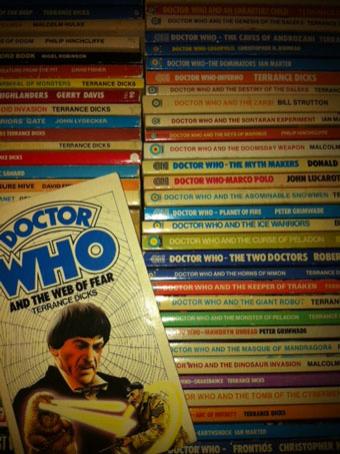
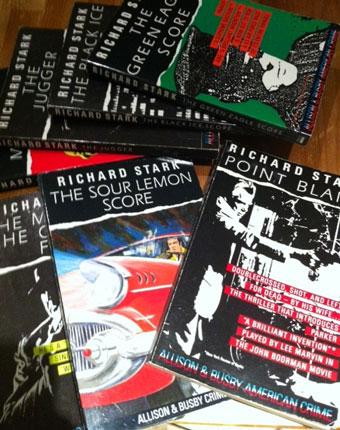
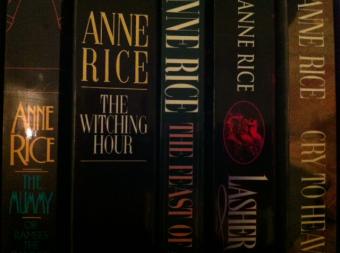
Some of my most treasured possessions are books. I have a collection of old Doctor Who novelisations (thanks to the awesome Seb Sharp) which take me back to my childhood every time I look at them. I have a handful of old Richard Stark crime novels that always remind me of a holiday in the USA during which I dedicated myself to collecting (and reading) as many of a particular imprint as I could. I have some ‘trade paperback’ editions of some Anne Rice novels which I picked up over a day in San Francisco, during which I separated myself from the rest of the family and spent my time giddily walking from bookshop to bookshop.
Like many possessions, books inevitably associate themselves with memories … and yet it’s not just about memories. I get a lot of pleasure from simply walking round bookshops (more so with secondhand bookshops for some reason). I’ve been guilty in the past of simply buying books because I loved the look and feel of them – and because they were included in a 3 for 2 deal. These books would sit proudly on my shelf but invariable end up unread. Lately I’ve managed to train myself not to buy books on a whim (and in writing this I wonder if it’s in any way connected to the drop in my reading rate?).
Of course, things are different now: the ebook is here. Having read the above you might think I’d try growing a second heart just so I can fill it with contempt for the non-physical book. As it happens quite the opposite is true.
The advent of the ebook, as well as the arrival of internet publishing channels for independent authors, has given me the chance to share my own stories with an audience for the first time. No longer am I subject to the narrow definitions of acceptance laid down by publishing houses, or subject to the whims of an editor’s taste or publishing restrictions. Now, for better or worse, I can complete a story, get it on the internet, and have people reading it almost instantly. Just a few years ago this would have been unimaginable.
This isn’t always a good thing: there are a lot of really, really bad writers out there who can now fill the virtual bookshelves with rubbish. However, for an author trying to find their voice and work out which kind of stories their potential audience want to connect with this sort of shortcut is priceless.
And yet, with convenience I can’t help thinking there’s always a price. If you’ve seen any post-apocalyptic films, particularly ones from the 1970s or thereabouts, you’ll have seen at least one where the survivors eventually learn about the world they’ve lost through the books that have survived.
Digital books won’t survive an apocalypse (unless it’s a strange one where our electricity and communications remain intact). There’ll be an entire generation of writing that will instantly disappear. I wonder if the survivors will find themselves learning about the past world through a strange combination of one-dollar Shakespeare classics and reality show biographies? No doubt some of the millions of copies of Fifty Shades will make it through and provide an invaluable sociographic insight into our current culture.
Obviously I hope this apocalypse never happens, but I do wonder what the historians of the future will make of a past where vast portions of our culture and heritage were stored on inaccessible digital media.
Anyway …
To cap off this typically rambling post I wanted to consider the question: what is a book?
Is it words printed on a page? No, an ebook is just as worthy of being called a book (even though we haven’t grown out of the ‘e’ distinction). Also, there are plenty of other instances of words printed on paper that aren’t books.
Is it a story? No, because our bookshops and libraries are filled with non-fiction, and some of my favourite reads of all time are non-fiction (I have a particular fondness for ‘behind the scenes’ type books, Hollywood history, and so on).
Is it prose? No, because most of us feel just as comfortable referring to children’s picture books or graphic novels (comic books) as books.
My conclusion is that a book, rather like a film, is escapism. A book will give us the chance to escape into a fictional world; into someone else’s life; into a different time. Even the blandest seeming books give us those moments where we imagine we can cook a flawless five course dinner; or fix our own car; or exercise ourselves back into fitness. Or simply to learn something we didn’t know before.
Books give us a window to somewhere else, it might not be somewhere far away, but the book is often the first step on that potential journey.
And if we don’t read we miss out on all those first steps that we could be taking.